NATO STO AVT-297 | Development of a Framework for Validation of Computational Tools for Analysis of Air and Sea Vehicles
 AVT-297
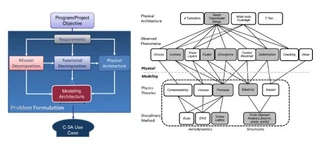
In the NATO STO AVT-297 project, I served as a lead graduate researcher within an international team of experts developing a systems engineering-based process for validating computational tools used in the analysis of air and sea vehicles. This involved a comprehensive examination of coupled constituent physics and their representation in computational models, assessing their accuracy and relevance for intended applications, and demonstrating the framework on a military mobility transport aircraft case study.
The work formed a key foundation of my Ph.D. research at Georgia Tech, advancing how multi-physics interactions in simulation environments are decomposed, mapped to validation requirements, and assessed under uncertainty.
Technical report chapters
- Chapter 7 (First Author): Yarbasi, E. Y., Bagdatli, B., & Mavris, D. N. Demonstration of the Framework on a Military Mobility Transport Case Study. NATO STO AVT-297 Technical Report.
- Chapter 6: Taylor, N. J., Mavris, D. N., Yarbasi, E. Y., & Bagdatli, B. A Process for Identifying Requirements for Physical Referent Data to Support Computational Model Validation. NATO STO AVT-297 Technical Report.

Efe Yarbasi is an Assistant Research Scientist in the Engineering Systems Group at the University of Michigan Transportation Research Institute (UMTRI). His research covers the safety of automated and driver-assistance systems and the electrification of transportation. He serves as principal investigator and co-principal investigator on projects sponsored by NHTSA, Toyota Motor North America, and the National Cooperative Highway Research Program. He co-leads the Low Altitude Airspace Working Group at M-Air.
He holds a PhD in Aerospace Engineering from Georgia Tech. There he worked in the Aerospace Systems Design Laboratory under Prof. Dimitri Mavris and developed methods to find and reduce the uncertainties that matter most in complex, multi-disciplinary designs. He is a member of AIAA and IEEE.
Students, please get in touch. I am looking for curious, motivated students to join my research. Projects range from crash analysis and AI for safety to EV charging and low-altitude airspace, and I mentor undergraduate and graduate students. If any of this sounds interesting, send me an email with a short note about your background and what you want to work on.