Methodology to Identify Physical or Computational Experiment Conditions for Uncertainty Mitigation

Jan 1, 2026·
Efe Yarbasi
Efe Yarbasi
,
Dimitri N. Mavris
· 0 min read
Abstract
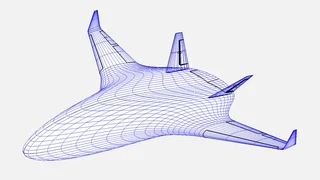
Complex engineering systems require integration of simulation of sub-systems and calculation of metrics to drive design decisions. This paper introduces a methodology for designing computational or physical experiments for system-level uncertainty mitigation purposes. The methodology follows a previously determined problem ontology, where physical, functional and modeling architectures are decided upon. By carrying out sensitivity analysis techniques utilizing system-level tools, critical epistemic uncertainties can be identified. Afterwards, a framework is introduced to design specific computational and physical experimentation for generating new knowledge about parameters, and for uncertainty mitigation. The methodology is demonstrated through a case study on an early-stage design Blended-Wing-Body (BWB) aircraft concept, showcasing how aerostructures analyses can be leveraged for mitigating system-level uncertainty, by computer experiments or guiding physical experimentation. The proposed methodology is versatile enough to tackle uncertainty management across various design challenges, highlighting the potential for more risk-informed design processes.
Type
Publication
AIAA Journal, 64(1), 46-56
Status
Peer-reviewed
publications
Efe Yarbasi
Authors
Assistant Research Scientist

Efe Yarbasi is an Assistant Research Scientist in the Engineering Systems Group at the University of Michigan Transportation Research Institute (UMTRI). His research covers the safety of automated and driver-assistance systems and the electrification of transportation. He serves as principal investigator and co-principal investigator on projects sponsored by NHTSA, Toyota Motor North America, and the National Cooperative Highway Research Program. He co-leads the Low Altitude Airspace Working Group at M-Air.

He holds a PhD in Aerospace Engineering from Georgia Tech. There he worked in the Aerospace Systems Design Laboratory under Prof. Dimitri Mavris and developed methods to find and reduce the uncertainties that matter most in complex, multi-disciplinary designs. He is a member of AIAA and IEEE.

Students: I enjoy working with students. If you are interested in my research, please send me an email.